
Is It Normal for a Heat Pump to Ice Up? Complete UK Homeowner Guide (2026)

Updated: Jun 10
Quick Answer
Yes — it is normal for an air source heat pump (ASHP) to develop a light layer of frost or temporary ice on the outdoor coil during cold, damp winter weather.
In fact, seeing some frost is often a sign that your heat pump is successfully extracting heat from outdoor air.
However, it is not normal if:
The outdoor unit becomes completely encased in thick ice
Ice remains after multiple defrost cycles
The outdoor fan becomes trapped in ice
Heating performance drops noticeably
The system struggles to reach the thermostat setting
Fault codes appear on the controller
Ice returns immediately after defrosting
Modern air source heat pumps are specifically designed to manage frost through automatic defrost cycles. The real concern is not whether frost appears, but whether the system can remove that frost effectively.
Key Takeaways
Light frost on an air source heat pump is usually normal during UK winter weather.
Heat pumps automatically remove frost using a built-in defrost cycle.
Temporary icing is expected in cold, damp, or humid conditions.
A heat pump covered entirely in thick ice may indicate a fault.
Restricted airflow, drainage problems, faulty sensors, and refrigerant issues are among the most common causes of excessive icing.
Persistent icing can reduce efficiency, increase electricity consumption, and place additional strain on system components.
Most serious icing complaints are caused by maintenance or installation issues rather than extreme weather alone.
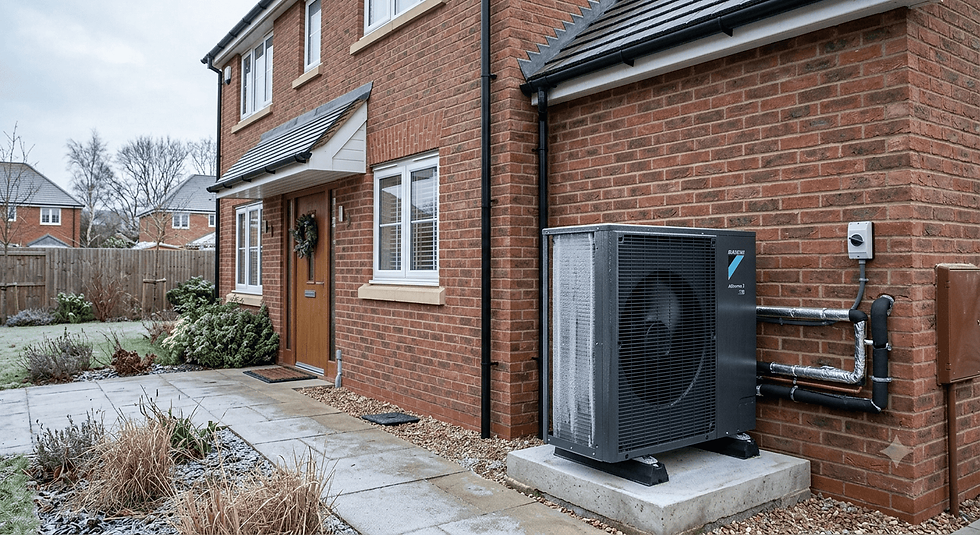
Is It Normal for a Heat Pump to Ice Up?
One of the most common questions we hear from UK homeowners during winter is:
"My heat pump has ice on it — should I be worried?"
In many cases, the answer is no.
After more than 15 years working with renewable heating systems and inspecting over 500 domestic air source heat pump installations, we have found that visible frost is one of the most misunderstood aspects of heat pump operation.
Many homeowners expect the outdoor unit to remain completely clear throughout winter.
That is not how heat pumps work.
Unlike a gas boiler, an air source heat pump extracts heat from outdoor air. Even when temperatures feel cold to us, there is still usable heat energy available in the air.
As the heat pump absorbs this heat, the temperature of the outdoor evaporator coil can fall below the surrounding air temperature. Moisture in the air then condenses onto the coil surface and freezes.
The result is a thin layer of frost.
Under typical UK winter conditions, particularly during cold mornings, damp weather, fog, and periods of high humidity, this process is completely normal.
The presence of frost alone does not indicate a fault.
The more important question is:
Can the heat pump remove the frost effectively through its defrost cycle?
If the answer is yes, the system is usually operating as intended.
Is it normal for a heat pump to ice up in winter?
Yes. Air source heat pumps commonly develop frost or light ice during cold and humid winter weather. Modern systems automatically remove this frost through defrost cycles. Ice only becomes a concern when it remains on the system for extended periods, blocks airflow, affects heating performance, or prevents the unit from operating correctly.
Why Do Heat Pumps Ice Up?
To understand why icing occurs, it helps to understand how an air source heat pump actually collects heat.
Many homeowners assume a heat pump only works when outdoor temperatures are comfortably above freezing.
In reality, modern systems can continue extracting heat from the air even when temperatures are close to or below 0°C.
As outdoor air passes across the evaporator coil, the refrigerant inside the system absorbs heat energy.
This causes the surface temperature of the coil to become colder than the surrounding air.
When humid air comes into contact with that cold surface, moisture condenses.
If the coil temperature falls below freezing, that moisture turns into frost.
This means icing can sometimes occur even when the outdoor air temperature itself is slightly above freezing.
This is one of the reasons homeowners are often surprised to see frost on a heat pump during relatively mild winter weather.
Weather Conditions That Increase Frost Formation
While frost can occur in a wide range of conditions, certain weather patterns significantly increase the likelihood of icing.
These include:
Temperatures between 0°C and 5°C
High humidity
Foggy mornings
Persistent damp weather
Rain followed by falling temperatures
Overnight temperature drops
Coastal environments with moisture-rich air
In our experience, homes located near coastal areas often experience more frequent frost formation than inland properties because humid air contains more moisture available for condensation.
This does not necessarily mean there is a problem.
It simply means the heat pump may need to perform defrost cycles more frequently.
Why Frost Is Not Always a Bad Sign
Many homeowners are surprised when they first notice frost forming on their heat pump and immediately assume something is wrong.
In reality, a light layer of frost is often a by-product of normal heat pump operation. As the system extracts heat from outdoor air, moisture can naturally condense and freeze on the evaporator coil when temperatures are low and humidity is high.
The presence of frost alone does not tell you whether the system is healthy or faulty.
What matters is how the heat pump responds. A properly functioning unit should detect frost buildup, initiate a defrost cycle when required, and return to normal operation without intervention.
For this reason, experienced engineers focus less on whether frost is present and more on whether the system can manage it effectively.
Homeowners should pay closer attention to signs such as heavy ice accumulation, poor heating performance, repeated fault codes, or frost that remains after multiple defrost cycles. These indicators provide a much clearer picture of system health than frost alone.
A simple layer of frost is usually part of winter operation. Persistent ice buildup is where genuine concerns begin.

How a Heat Pump Removes Ice Automatically
Modern air source heat pumps are designed with an automatic defrost function specifically to manage frost buildup.
Without this feature, ice would eventually reduce airflow, decrease efficiency, and impair heating performance.
Defrost mode is therefore a normal and essential part of winter operation.
Step 1: Frost Detection
Temperature sensors monitor conditions around the outdoor heat exchanger.
When frost reaches a predetermined threshold, the system prepares to enter defrost mode.
Step 2: Defrost Activation
The control system temporarily pauses normal heating operation.
This is completely normal and usually lasts only a short period.
Step 3: Refrigeration Cycle Reversal
The heat pump reverses the refrigeration cycle.
Instead of extracting heat from outdoor air, it directs heat toward the outdoor coil.
Step 4: Ice Melting
The accumulated frost melts away from the coil surface.
Homeowners may notice water dripping beneath the unit.
This is expected.
Step 5: Drainage
The melted frost drains away through the unit's drainage system.
Proper drainage is critical because standing water can refreeze and contribute to future icing problems.
Step 6: Normal Heating Resumes
Once the frost has been removed, the system automatically returns to normal operation.
Most defrost cycles last between:
5 and 15 minutes
although duration varies depending on outdoor conditions, humidity levels, system design, and the amount of frost present.
What Homeowners Often Notice During Defrost Mode
Many service calls are triggered simply because a homeowner has witnessed a normal defrost cycle for the first time.
During defrost mode, you may observe:
Steam rising from the outdoor unit
Water dripping beneath the heat pump
Changes in fan operation
Temporary pauses in heating output
Different operating sounds
These behaviours are usually part of normal operation.
Steam is particularly common and is often mistaken for smoke.
In reality, it is simply warm air interacting with cold outdoor temperatures as frost melts from the coil.
Understanding these signs can help homeowners distinguish normal winter operation from a genuine fault.
Normal Frost vs Problematic Ice Buildup
One of the easiest ways to determine whether your heat pump is operating normally is to assess the type of ice present.
Not all icing is equal.

A thin frost layer on the outdoor coil is very different from a unit that is completely frozen solid.
The table below provides a practical homeowner guide.
Observation | Normal? | Recommended Action |
Thin frost on the outdoor coil | Yes | No action needed |
Light ice during cold, damp weather | Yes | Monitor |
Frost disappears after defrost cycle | Yes | No action needed |
Temporary steam during defrost | Yes | No action needed |
Ice covering the entire coil | No | Investigation recommended |
Fan blades trapped in ice | No | Professional assessment |
Ice remains after multiple defrost cycles | No | Professional assessment |
Reduced heating performance | No | Inspection recommended |
Error codes appearing regularly | No | Inspection recommended |
Thick ice around the base of the unit | Potential issue | Check drainage |
A useful rule is this:
Frost is usually normal. Frozen solid is not.
Frost on the Coil but Home Is Warm
This is usually normal. The heat pump is extracting heat from outdoor air and managing frost through automatic defrost cycles.
Steam Coming From the Outdoor Unit
This is commonly seen during defrost mode and is typically a sign that frost is being removed from the coil.
Ice Around the Bottom of the Unit
This may indicate drainage issues, particularly if defrost water cannot drain away and begins to refreeze.
Outdoor Fan Surrounded by Ice
This is not usually considered normal and should be investigated promptly because airflow restrictions can affect both efficiency and system performance.
Heat Pump Constantly Entering Defrost Mode
Frequent defrost cycles can occur during cold and humid weather, but excessive defrosting may indicate airflow, drainage, sensor, or performance issues.
Heat Pump Icing Up? Quick Diagnosis Checklist
Before assuming your heat pump has a fault, work through the following checks.
Frost Only on the Outdoor Coil?
Yes: A light frost layer is usually normal during cold and damp weather.
No: Continue to the next step.
Has the Unit Recently Entered Defrost Mode?
Yes: Allow the cycle to complete and check whether the frost clears.
No: Continue monitoring. Most systems automatically enter defrost mode when required.
Is the Outdoor Fan Operating Normally?
Yes: Airflow is likely adequate.
No: Restricted airflow or fan issues can accelerate ice buildup and should be investigated.
Is Ice Covering Most of the Outdoor Unit?
Yes: This is not usually considered normal and may indicate airflow restrictions, drainage issues, sensor faults, or refrigerant-related problems.
Has Heating Performance Declined?
Yes: If your home is struggling to maintain temperature alongside persistent icing, professional assessment is recommended.
Are Fault Codes Appearing?
Yes: Follow the manufacturer's guidance and arrange inspection if the issue continues.
Quick Rule
If frost disappears after normal defrost cycles, the system is usually operating correctly.
If ice continues building, affects performance, or remains after repeated defrost cycles, further investigation is warranted.
My Heat Pump Is Covered in Ice — Is That Normal?
This is one of the most common winter service enquiries.
If the outdoor unit appears completely covered in ice, further investigation is usually required.
A healthy heat pump should be able to remove frost through its automatic defrost cycle before significant ice accumulation occurs.
When a system becomes heavily iced, it often indicates that frost is forming faster than the unit can remove it.
The difference between a frosted unit and a frozen unit is important.
A frosted coil may appear white and lightly coated.
A frozen unit may have:
Thick ice covering the evaporator coil
Ice extending across the grille
Ice around the outdoor fan
Frozen water beneath the unit
Ice surrounding multiple components
At this stage, heating performance and efficiency are often affected.

What We Commonly Find During UK Heat Pump Inspections
One advantage of inspecting hundreds of heat pump systems is that patterns become obvious.
After carrying out inspections and performance assessments across domestic properties, certain causes appear repeatedly.
Many homeowners assume extreme weather is responsible.
In reality, weather is often only part of the story.
The most common issues we encounter include:
Restricted Airflow
Outdoor units positioned too close to walls, fences, sheds, or vegetation.
Blocked Drainage
Defrost water unable to drain correctly, leading to refreezing.
Dirty Evaporator Coils
Dirt, leaves, and debris reducing airflow and heat transfer.
Faulty Sensors
Incorrect readings preventing effective defrost operation.
Poor Installation Positioning
Units installed where airflow is naturally restricted.
Deferred Maintenance
Minor issues allowed to develop into larger performance problems.
One observation consistently stands out:
Most serious icing complaints are caused by airflow restrictions, drainage problems, or sensor faults rather than unusually cold weather.
This is why diagnosis is important before assuming a system requires major repairs.
Why Is My Heat Pump Icing Up Excessively?
If icing persists, several underlying causes should be considered.
1. Restricted Airflow
Air source heat pumps require a continuous supply of outdoor air.
Anything that restricts airflow can accelerate frost formation.
Common examples include:
Leaves
Dirt buildup
Garden furniture
Shrubs
Fencing
Storage items
Snow accumulation
When airflow decreases, the outdoor coil becomes colder, increasing the likelihood of frost and ice formation.
During inspections, airflow issues are among the most common causes of excessive icing.
2. Drainage Problems
Every defrost cycle produces water.
If that water cannot drain away properly, it may freeze around the base of the unit.
Over time, this can create significant ice buildup.
Warning signs include:
Ice beneath the heat pump
Standing water around the base
Repeated freezing in the same location
Drain channels blocked by debris
Good drainage design is essential for reliable winter performance.
3. Defrost Sensor Problems
Modern heat pumps rely on sensors to determine when defrosting is required.
If a sensor provides inaccurate readings, several issues can occur.
The system may:
Delay defrost activation
End defrost too early
Fail to enter defrost mode
Defrost unnecessarily often
Any of these situations can contribute to icing problems.
4. Refrigerant Issues
The refrigerant circuit plays a critical role in heat transfer.
Low refrigerant levels can cause:
Abnormally cold coil temperatures
Excessive frost formation
Reduced heating output
Lower efficiency
Unlike airflow issues, refrigerant faults require specialist diagnosis and should only be handled by qualified professionals.
5. Outdoor Fan Problems
The outdoor fan is responsible for moving air across the evaporator coil.
If the fan becomes damaged, obstructed, or fails entirely, frost can accumulate rapidly.
Symptoms may include:
Poor airflow
Unusual noises
Increased icing
Reduced heating performance
Because airflow is fundamental to heat pump operation, even minor fan issues can have a noticeable effect.
Does Ice Affect Heat Pump Efficiency?
Yes.
This is where normal frost and excessive icing become very different.
A small amount of frost is expected and is already accounted for in the system's design.
Excessive ice, however, can significantly reduce efficiency.
As ice accumulates:
Heat transfer becomes less effective
Airflow is reduced
Defrost cycles become more frequent
Electricity consumption increases
Heating output may decrease
The system effectively has to work harder to achieve the same result.
How Excessive Ice Can Affect Running Costs
Homeowners often focus on visible ice while overlooking the hidden impact on energy use.
When icing becomes excessive:
Heating cycles may last longer
Defrost cycles may occur more frequently
Electrical consumption can increase
Comfort levels may decline
Over time, unresolved icing issues can contribute to higher operating costs.
This is one reason why recurring frost problems should not be ignored.
Understanding COP and Winter Performance
Heat pump efficiency is often measured using a metric called COP (Coefficient of Performance).
COP compares the amount of heat produced with the electricity consumed.
A well-performing system may produce several units of heat for every unit of electricity used.
However, when ice buildup interferes with heat transfer:
COP can decline
Energy efficiency decreases
System performance becomes less predictable
Modern inverter-driven heat pumps are specifically designed to minimize these losses through intelligent controls and efficient defrost management.
Why Some UK Homes Experience More Frost Than Others
Not all heat pumps operate under the same environmental conditions.
Location matters.
In our experience, icing tends to be more common in:
Scotland
Northern England
Wales
Coastal areas
Exposed rural locations
High-humidity regions
Homes near the coast often experience more frequent frosting because moist air contains more water vapour available for condensation.
Similarly, shaded locations may remain colder for longer periods, increasing the likelihood of frost formation.
This does not automatically indicate poor performance.
It simply means the system may need to defrost more often.
What Do Heat Pump Manufacturers Say About Frost?
Many homeowners assume any visible frost indicates a fault. However, major heat pump manufacturers design their systems with frost formation in mind.
Manufacturers commonly explain that temporary frost on the outdoor coil is a normal part of winter operation and is managed through automatic defrost cycles.
This applies to many modern air source heat pumps, including systems that use inverter technology and low-temperature refrigerants such as R32 and R290.
The key consideration is not whether frost appears, but whether the heat pump can successfully remove that frost and return to normal operation.
If ice remains after repeated defrost cycles or begins affecting heating performance, further investigation may be required.
Heat Pump Type and Frost Behaviour
Different heat pump designs can behave slightly differently during winter operation.
Monobloc Heat Pumps
Monobloc systems contain refrigeration components within a single outdoor unit.
Because all major refrigeration components are located outdoors, frost is often more visible during winter.
This does not necessarily indicate a problem.
Split-System Heat Pumps
Split systems divide components between indoor and outdoor units.
Although frost still forms on the outdoor coil, defrost behaviour may vary depending on the manufacturer and system design.
Inverter-Driven Heat Pumps
Most modern systems use inverter technology.
These units continuously adjust output according to heating demand.
Inverter-driven heat pumps generally manage frost more effectively and minimize efficiency losses during winter operation.
Normal Frost vs Dangerous Ice: Visual Checklist
When reviewing your heat pump, the appearance of the ice often provides useful clues.
Usually Normal
Thin white frost on the outdoor coil
Frost that disappears after defrost cycles
Light ice during damp winter mornings
Water dripping beneath the unit during defrost
Temporary steam during defrost operation
Potentially Problematic
Thick ice covering the entire unit
Fan blades trapped in ice
Ice remaining after several defrost cycles
Frozen drainage areas beneath the heat pump
Reduced heating performance
Repeated fault codes
If your heat pump falls into the second category, professional assessment is generally recommended.
Expert Insight: What Homeowners Often Get Wrong
One of the most common misconceptions we encounter is the belief that a heat pump should remain completely frost-free throughout winter.
In practice, many well-performing systems develop frost during cold, damp weather and then remove it automatically through scheduled defrost cycles. Seeing frost on the outdoor unit does not automatically mean the system is inefficient or malfunctioning.
The more useful question is whether the heat pump continues to heat the property effectively while managing frost as intended.
During inspections, the issues that most often lead to serious icing problems are restricted airflow, drainage concerns, maintenance neglect, or component faults—not the frost itself.
Understanding this distinction helps homeowners identify genuine warning signs while avoiding unnecessary concern during normal winter operation.
When Should You Call a Heat Pump Engineer?
While occasional frost is expected, certain warning signs justify professional assessment.
Arrange an inspection if:
Ice remains for more than 24 hours
The unit becomes frozen solid
Defrost cycles appear ineffective
Heating performance declines noticeably
Energy consumption rises unexpectedly
The outdoor fan stops operating correctly
Fault codes appear repeatedly
Ice quickly returns after defrosting
A professional assessment can identify whether the issue relates to airflow, drainage, sensors, refrigerant levels, installation factors, or another underlying cause before efficiency declines further.
Frequently Asked Questions
Should a Heat Pump Have Ice on It?
Yes, a heat pump can develop a light layer of frost or temporary ice during cold, damp weather, and this is usually normal. Air source heat pumps extract heat from outdoor air, which naturally causes moisture to condense and freeze on the outdoor coil. Modern systems are designed to remove this frost automatically through defrost cycles. The concern begins when thick ice remains for long periods or affects heating performance.
Is It Normal for My Heat Pump to Frost Up Every Morning?
Yes, morning frost is common, especially during UK winter conditions when overnight temperatures drop and humidity remains high. Many homeowners notice frost early in the day only for it to disappear after the heat pump completes one or more automatic defrost cycles. As long as the frost clears and the system continues heating effectively, occasional morning frosting is generally considered normal operation.
How Long Should Frost Stay on a Heat Pump?
Frost should normally disappear during the heat pump's automatic defrost cycle, which typically lasts between 5 and 15 minutes. The exact timing depends on outdoor temperature, humidity levels, and the amount of frost present. If frost remains after several defrost cycles, continues building throughout the day, or starts affecting heating performance, the system may require professional inspection.
Why Is My Heat Pump Covered in Ice?
A heat pump completely covered in thick ice is usually a sign that something is preventing the system from removing frost effectively. Common causes include restricted airflow, blocked drainage, faulty defrost sensors, refrigerant issues, or fan malfunctions. While light frost is normal, a heavily iced unit can reduce efficiency and heating output and should be assessed by a qualified heat pump engineer.
Can Snow Damage a Heat Pump?
Snow itself rarely damages a heat pump, as modern systems are designed to operate in winter conditions. However, excessive snow accumulation can block airflow, obstruct drainage, and increase frost formation around the outdoor unit. Keeping snow, ice, and debris away from the heat pump helps maintain efficient operation and reduces the risk of winter performance issues.
Should I Turn Off My Heat Pump If It Is Iced Up?
Not necessarily. A small amount of frost or temporary ice is often part of normal winter operation and should be removed automatically during a defrost cycle. However, if the unit is heavily iced, unable to heat your home effectively, displaying fault codes, or failing to clear frost after repeated defrost cycles, professional diagnosis is recommended rather than simply turning the system off.
Can I Pour Hot Water on a Frozen Heat Pump?
No. Pouring hot water on a frozen heat pump is not recommended because sudden temperature changes can damage components and place stress on the coil. It also treats only the symptom rather than the underlying cause. If thick ice continues to build up, the safest approach is to identify whether airflow restrictions, drainage issues, or component faults are preventing normal defrost operation.
Why Does My Heat Pump Keep Going Into Defrost Mode?
Frequent defrost cycles can be normal during periods of cold, damp, or humid weather because frost forms more quickly under these conditions. However, excessive defrosting may indicate restricted airflow, dirty coils, drainage problems, or sensor issues. If your heat pump spends an unusually large amount of time in defrost mode or heating performance declines, a professional assessment may be worthwhile.
What Causes a Heat Pump Not to Defrost?
A heat pump may fail to defrost properly because of faulty temperature sensors, control board issues, refrigerant problems, fan failures, or restricted airflow around the outdoor unit. When defrost mode does not operate correctly, frost can continue building until significant ice accumulation occurs. Persistent icing that remains after multiple defrost cycles should be investigated by a qualified engineer.
Do Modern Heat Pumps Work Efficiently in Winter?
Yes. Modern inverter-driven air source heat pumps are designed to operate efficiently even during cold UK winter conditions. While frost formation is a normal part of operation, advanced controls and automatic defrost systems help maintain performance. A properly installed and maintained heat pump can continue providing reliable, energy-efficient heating throughout winter, even when outdoor temperatures approach freezing.
At What Temperature Does a Heat Pump Start Icing Up?
A heat pump can begin developing frost when outdoor temperatures are close to freezing and humidity levels are high. Frost formation is often most common between 0°C and 5°C because moisture in the air readily condenses and freezes on the outdoor coil. The exact temperature varies depending on weather conditions, system design, and airflow around the unit.
How Often Should a Heat Pump Go Into Defrost Mode?
Most heat pumps enter defrost mode periodically during cold weather, but there is no fixed schedule because operation depends on temperature, humidity, and frost accumulation. During damp winter conditions, defrost cycles may occur every 30 to 90 minutes. Frequent defrosting is not always a problem, provided the system continues heating effectively and clears frost successfully.
Why Is There Ice Around the Bottom of My Heat Pump?
Ice around the base of a heat pump is often caused by defrost water that cannot drain away properly and subsequently refreezes. Poor drainage, blocked channels, uneven installation surfaces, or prolonged freezing conditions can all contribute. While some water beneath the unit is normal during defrosting, significant ice accumulation around the base should be investigated.
Is Steam Coming From My Heat Pump Normal?
Yes. Steam is commonly seen during a defrost cycle and is usually a sign that the system is operating correctly. As frost melts from the outdoor coil, warm air meets cold outdoor temperatures and creates visible vapour. Many homeowners mistake this for smoke, but in most cases it is simply part of the normal defrost process.
Can a Heat Pump Work When Covered in Frost?
Yes. A heat pump can continue operating with a light layer of frost because it is designed to remove frost automatically through defrost cycles. However, if frost develops into thick ice that restricts airflow or covers large portions of the outdoor unit, efficiency and heating performance may suffer, indicating a potential issue that requires attention.
Related Guides
You may also find the following resources useful:
Why Is My Heat Pump Icing Up?
Why Is My Heat Pump Running All the Time?
Heat Pump Not Heating Properly
Heat Pump Condensate Drain Freezing
Air Source Heat Pump Winter Efficiency Guide
Heat Pump Running Costs in Winter
Heat Pump Servicing Checklist for UK Homeowners
Industry Guidance and References
Energy Saving Trust guidance on heat pump winter performance
Manufacturer documentation for automatic defrost operation
Heat Pump Icing Problems Across the Midlands and Surrounding Areas
As local heat pump installers and service specialists, we regularly support homeowners across Nottingham, Derby, Leicester, Lincoln, Northampton, Sheffield, Barnsley, Chesterfield, Birmingham, Coventry, Wolverhampton, Solihull, Stoke-on-Trent, Staffordshire, Shropshire, Telford, Cheshire, Worcestershire, Oxford, Cambridge, Manchester, Liverpool, York, and surrounding areas.
About Air Source Company
Air Source Company specializes in renewable heating solutions for homeowners across the UK.
With more than 15 years of industry experience and over 1,000 completed installations, the company supports homeowners through every stage of the heat pump journey—from system design and installation to servicing, diagnostics, and long-term optimization.
Air Source Company is:
TrustMark Accredited
Experienced in domestic renewable heating systems
Focused on energy efficiency and long-term performance
Services include:
Air source heat pump installation
Heat pump servicing and maintenance
Heat pump diagnostics
Winter performance assessments
System optimization
Heat-loss analysis
Boiler Upgrade Scheme guidance
Renewable heating consultations
Air Source Company supports homeowners across the Midlands, Yorkshire, North West England, Oxfordshire, Cambridgeshire, and surrounding regions, helping households improve efficiency, diagnose performance issues, and maximize the long-term value of their heat pump systems.
About the Author
Ash Sethi
Ash Sethi is a UK renewable heating specialist with more than 15 years of experience working with air source heat pump systems.
His expertise includes:
Heat pump diagnostics
Installation planning
System optimization
Heat-loss assessments
Cold-weather performance analysis
Renewable energy integration
UK installation compliance standards
Having contributed to more than 500 system inspections and supported over 1,000 heat pump installations, Ash helps homeowners understand how heat pumps perform in real-world UK conditions and how to maximize efficiency throughout the year.
His work focuses on practical guidance backed by field experience rather than theoretical assumptions.
Expert Conclusion
For most UK homeowners, seeing frost on an air source heat pump is not a cause for alarm. Under cold and humid winter conditions, temporary frost formation is a normal result of the heat extraction process and is something modern heat pumps are specifically designed to handle.
The key difference lies in how the system manages that frost. A healthy heat pump should complete defrost cycles successfully, maintain heating performance, and continue operating efficiently even during challenging weather conditions.
When ice becomes excessive, remains after repeated defrost cycles, restricts airflow, or affects indoor comfort, further investigation is usually justified. In many cases, the underlying cause is related to airflow restrictions, drainage issues, sensor faults, or maintenance concerns rather than the weather itself.
By understanding the difference between normal frost and abnormal ice buildup, homeowners can make informed decisions, avoid unnecessary worry, and address genuine performance issues before they develop into more costly repairs.

Concerned About Ice on Your Heat Pump?
While a light frost layer is usually normal, persistent ice buildup should not be ignored.
If your heat pump remains frozen for extended periods, struggles to heat your home, repeatedly displays fault codes, or appears unable to complete defrost cycles successfully, professional diagnosis can help identify the underlying cause before efficiency and performance decline further.
Our team supports homeowners across Nottingham, Derby, Leicester, Lincoln, Northampton, Sheffield, Chesterfield, Birmingham, Coventry, Wolverhampton, Staffordshire, Shropshire, Cheshire, Worcestershire, Oxford, Cambridge, Manchester, Liverpool, York, and surrounding areas.
A professional assessment can evaluate:
Defrost cycle performance
Airflow restrictions
Drainage problems
Outdoor fan operation
Refrigerant system health
Overall winter efficiency
Identifying minor issues early can help prevent unnecessary running costs, avoid avoidable component wear, and maintain reliable winter heating performance.
Book a professional heat pump assessment to determine whether the icing you are seeing is normal winter frost or a developing system fault.


Comments