
Heat Pump Short Cycling Explained (UK Engineering Guide 2026)

Quick Answer
Heat pump short cycling occurs when the system turns on and off too frequently without completing a stable heating or cooling cycle.
In a properly functioning air source heat pump, a normal run cycle typically lasts 20–60 minutes or longer depending on outdoor temperature and load conditions.
Short cycling is not normal operation and usually indicates an underlying issue such as:
Incorrect thermostat configuration or placement
Oversized heat pump relative to building load
Restricted airflow at the outdoor unit or indoor distribution system
Refrigerant charge imbalance
Faulty sensors or control board logic
Activation of compressor protection or anti-short-cycle timers
If left unresolved, short cycling increases wear on the compressor, reduces efficiency (COP drop), and can significantly increase energy consumption.

What Is Heat Pump Short Cycling?
A heat pump is designed to operate in long, steady heating or cooling cycles rather than repeatedly switching on and off.
Heat pump short cycling occurs when the system starts, runs for a brief period, shuts down prematurely, and then restarts again shortly afterwards. In many residential systems, these cycles may last only 2–10 minutes before the unit switches off.
Typical short cycling behaviour includes:
Heat pump starts normally
Runs for only a few minutes
Shuts down before stable operation is achieved
Restarts repeatedly throughout the day
This pattern prevents the system from operating as efficiently as intended and can lead to increased electricity consumption, uneven indoor temperatures, and unnecessary wear on critical components such as the compressor.
Unlike normal operation, where a heat pump gradually adjusts its output to match demand, short cycling interrupts the system before it can reach stable operating conditions.
Engineering Definition
From an engineering perspective, short cycling occurs when the heat pump's demand signal is satisfied, interrupted, or overridden before the refrigerant circuit and control system reach stable equilibrium. The result is repeated compressor shutdown and restart events that reduce efficiency and place additional stress on the system.
In most cases, short cycling is not a fault in itself but a symptom of an underlying issue involving system sizing, thermostat control, airflow, refrigerant performance, hydraulic balance, or control logic.
Normal vs Abnormal Heat Pump Operation
Operating Condition | Normal Behaviour | Short Cycling Behaviour |
Run time per cycle | 20–60+ minutes | 2–10 minutes |
Compressor activity | Continuous modulation | Frequent start/stop |
Room temperature stability | Stable ±0.5–1.0°C | Fluctuating |
Energy efficiency (COP) | High (2.5–5.0 typical) | Reduced efficiency compared with normal operation |
System wear | Low | High |

Heat Pump Short Cycling Diagnosis Matrix
The symptoms associated with heat pump short cycling can provide strong clues about the underlying fault. While a professional diagnosis may still be required, the table below shows the most common symptom-to-cause relationships found in residential air source heat pump systems.
Symptom | Likely Cause | Severity | Recommended Action |
Heat pump runs for 2–5 minutes then stops | Oversized heat pump | High | Review heat loss calculations and system sizing |
Short cycling started after thermostat replacement | Thermostat compatibility or configuration issue | Medium | Check thermostat settings and control logic |
Outdoor fan continues but compressor stops | Refrigerant, pressure protection, or sensor issue | High | Professional diagnosis recommended |
Heat pump cycles more frequently during mild weather | Oversizing or control settings | Medium | Review weather compensation and temperature settings |
Unit stops and restarts repeatedly with fault codes | Sensor or control board issue | High | Engineering inspection required |
Heating performance poor despite frequent cycling | Airflow, hydraulic flow, or refrigerant problem | High | Full system diagnostic recommended |
Heat pump cycles every 5 minutes consistently | Control instability or incorrect thermostat differential | High | Check thermostat hysteresis and control settings |
This matrix provides an initial diagnostic framework, but accurate fault identification may require pressure testing, sensor verification, airflow measurements, and system performance analysis.
Main Causes of Heat Pump Short Cycling
1. Oversized Heat Pump (Most Common Root Cause)
If system capacity exceeds building heat demand:
Target temperature is reached too quickly
Thermostat shuts system off early
Rapid restart cycle begins
Engineering Indicator:
Short runtime even in cold weather
Indoor temperature overshoot
2. Thermostat Fault or Poor Placement
Short cycling frequently begins after thermostat changes.
Common issues:
Installed near heat source (radiator, sunlight)
Installed in low airflow zone
Incorrect differential (hysteresis too narrow)
Smart thermostat incompatible with heat pump logic
Result:
False temperature readings → premature shutdown
3. Compressor Protection and Anti-Short-Cycle Logic
Modern heat pumps are designed to protect the compressor from rapid start-stop operation.
Most systems include built-in safeguards such as:
Anti-short-cycle timers
High-pressure protection
Low-pressure protection
Thermal overload protection
Inverter ramp-up controls
A typical anti-short-cycle timer prevents the compressor from restarting for approximately 3–10 minutes after shutdown.
If these protection systems activate repeatedly, the protection mechanism itself is usually not the root cause. Instead, it often indicates an underlying issue such as thermostat instability, refrigerant imbalance, airflow restriction, or incorrect system sizing.
Repeated compressor protection events should always be investigated because they can indicate abnormal operating conditions that reduce efficiency and increase component wear.
4. Refrigerant Charge Imbalance
Low or excessive refrigerant affects pressure dynamics:
Low charge:
Evaporator temperature drops too quickly
System shuts down on protection limits
Overcharge:
High discharge pressure triggers shutdown
5. Airflow Restriction (Outdoor Unit or Internal System)
Restricted airflow reduces heat exchange efficiency:
Dirty evaporator coil
Blocked fan grille
Poor clearance around outdoor unit
Result:
Rapid temperature imbalance → short cycles
6. Sensor or Control Board Fault
Key sensors involved:
Outdoor temperature sensor
Return water temperature sensor
Coil temperature sensor
Faulty readings cause incorrect control decisions.
7. Hydraulic System Issues (Water-Based Systems)
For hydronic heat pumps:
Low water flow rate
Pump failure or airlocks
Blocked filter strainers
This causes rapid temperature rise → shutdown.
8. System Transition After Thermostat Change
Very common real-world scenario.
After thermostat replacement:
Communication mismatch (OpenTherm / relay control)
Incorrect cycle delay settings
Aggressive setpoint behaviour
Heat Pump Short Cycling in Heating Mode vs Cooling Mode
Although short cycling can occur in both operating modes, the underlying causes and system behaviour are often different.
Heating Mode Short Cycling
Heating-mode short cycling is the most common form encountered in UK air source heat pump installations, particularly during winter operation and in boiler-to-heat-pump retrofit properties.
Common Symptoms
Rapid heating followed by premature shutdown
Frequent compressor start-stop cycles
Cold spots across radiators or underfloor heating zones
Unstable indoor temperatures
Higher-than-expected electricity consumption
Common Causes
Oversized heat pump relative to building heat demand
Flow temperature settings that are too high
Incorrect thermostat placement or configuration
Poor hydraulic balancing
Restricted water flow through the heating system
Why It Happens
In heating mode, the heat pump is designed to deliver heat gradually and continuously. If the system reaches its target temperature too quickly, or if the controls receive inaccurate temperature feedback, the compressor may shut down before stable operating conditions are achieved.
This repeated interruption prevents efficient modulation and can reduce overall system performance.
Cooling Mode Short Cycling
Cooling-mode short cycling is less common in UK residential properties but can occur in reversible heat pump systems during warmer weather.
Common Symptoms
Rooms cool down too quickly
Frequent compressor restarts
Uneven indoor temperatures
Reduced humidity control
Increased system wear
Common Causes
Low cooling demand relative to system capacity
Poor thermostat or sensor placement
Incorrect control settings
Airflow restrictions
Control logic or communication faults
Why It Happens
During cooling operation, an oversized or poorly configured system may remove heat from the room faster than required. The thermostat quickly reaches its target temperature and shuts the system down, only for cooling demand to return shortly afterwards.
This start-stop pattern reduces the heat pump's ability to manage humidity effectively and can lead to less consistent indoor comfort compared with longer, stable cooling cycles.
Can Weather Compensation Cause Heat Pump Short Cycling?
Yes, incorrect weather compensation settings can contribute to short cycling in modern air source heat pumps.
Weather compensation automatically adjusts flow temperature based on outdoor conditions. When configured correctly, it allows the heat pump to operate in long, efficient cycles.
However, if the compensation curve is too aggressive:
Flow temperatures may rise too quickly
Heat demand may be satisfied prematurely
The thermostat may shut the system down early
Frequent restart cycles can occur
This issue is particularly common after commissioning adjustments, control upgrades, or changes to heating system settings.
For this reason, engineers often review weather compensation curves when investigating unexplained cycling behaviour.
Heat Pump Short Cycling Troubleshooting Checklist
Before arranging a professional inspection, homeowners can perform several basic checks to help identify common causes of short cycling.
1. Check Thermostat Settings
Verify that the thermostat is operating in the correct heating or cooling mode and that recently changed settings have not altered system behaviour.
Look for:
Recent thermostat replacement or upgrades
Incorrect temperature schedules
Excessively narrow temperature differentials
Smart thermostat compatibility issues
If short cycling began shortly after a thermostat change, this should be investigated first.
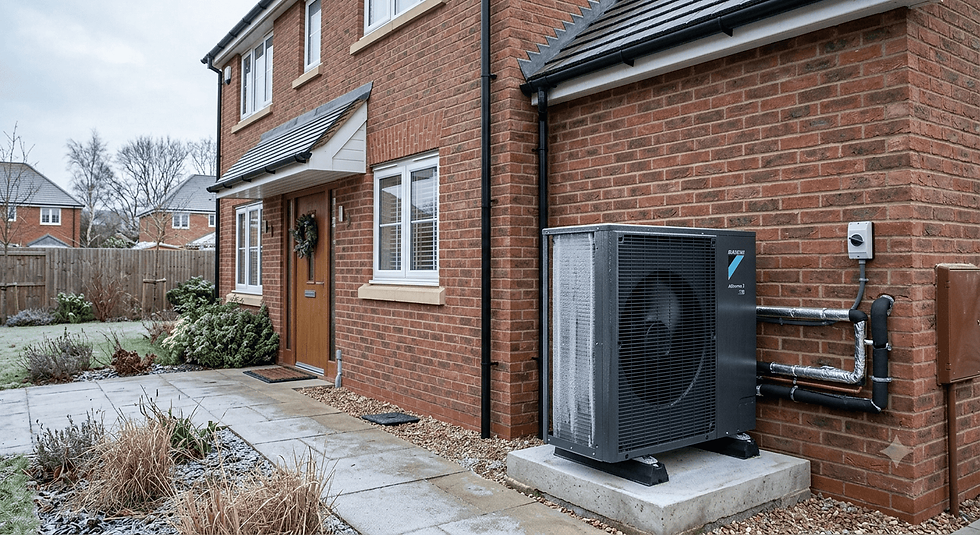
2. Inspect Airflow Around the Outdoor Unit
Restricted airflow can reduce heat transfer efficiency and trigger protective shutdowns.
Check for:
Leaves, debris, or vegetation around the unit
Blocked fan grilles
Ice accumulation during winter
Insufficient clearance around the heat pump
Most manufacturers recommend maintaining clear space around the outdoor unit to support proper airflow.
3. Monitor Cycle Length
Observe how long the heat pump runs before shutting down.
As a general guide:
20–60 minutes: typically normal operation
10–20 minutes: may be acceptable under some conditions
Less than 10 minutes repeatedly: potential short cycling
Consistently short run times usually indicate a control, sizing, airflow, or refrigerant-related issue.
4. Check for Error Codes
Many modern heat pumps display warning codes when sensors, controls, pressures, or safety systems detect abnormal operation.
Record any fault codes and provide them to your engineer during diagnosis.
Error codes often help identify whether the problem is related to:
Refrigerant pressure
Temperature sensors
Fan operation
Compressor protection systems
Control board communication
5. Assess Heating Performance
Consider whether the system is maintaining comfortable indoor temperatures.
Warning signs include:
Rooms heating unevenly
Persistent cold spots
High energy consumption
Frequent thermostat adjustments
Reduced comfort despite continuous operation
Poor performance combined with frequent cycling often indicates a deeper system issue.
6. Arrange Professional Diagnostics When Needed
If the heat pump continues cycling every few minutes after basic checks, professional testing may be required.
Engineers may perform:
Refrigerant pressure testing
Sensor verification
Hydraulic flow measurements
Thermostat communication analysis
Heat loss and sizing assessments
Control system diagnostics
Accurate diagnosis helps identify the root cause rather than simply treating the symptoms of short cycling.

Diagnostic Decision Tree (Engineering Logic)
Step 1: Check runtime duration
20 min → normal operation
<10 min → possible short cycling
Step 2: Check thermostat location/settings
Recent change → high probability root cause
Step 3: Inspect airflow
Blocked/dirty → correct immediately
Step 4: Check error codes
Compressor or sensor fault → engineer required
Step 5: Evaluate system sizing
Oversized system → design issue
Performance Impact of Short Cycling
Short cycling can significantly reduce efficiency, increase electricity consumption, and accelerate compressor wear due to repeated start-stop operation.
What Engineers Commonly Find in UK Installations
Based on field diagnostics in domestic air source heat pump systems:
Oversized units installed during boiler replacements
Incorrect thermostat placement in hallway zones
Dirty outdoor coils reducing heat exchange
Incorrect flow temperature settings after commissioning
Lack of proper hydraulic balancing
Most short cycling issues are not hardware failure, but design or setup faults.
Why Short Cycling Occurs in UK Homes More Often Than Homeowners Expect
Many UK air source heat pump installations operate in properties that were originally designed for gas or oil boilers.
Common examples include:
Victorian and Edwardian homes
1930s semi-detached properties
Boiler-to-heat-pump retrofit projects
Homes with undersized radiators
In these situations, incorrect flow temperatures, poor hydraulic balancing, and mismatched emitter performance can contribute to unstable operation and increased cycling behaviour.
This is one reason why proper heat loss calculations, emitter sizing, and commissioning are critical during UK heat pump installations.
When Short Cycling Is Serious
Immediate engineering inspection is required if:
System cycles every 2–5 minutes consistently
Heating demand is not being met
Error codes appear repeatedly
Compressor noise becomes irregular
Energy consumption increases sharply
Experiencing frequent short cycling or recurring fault codes? A professional heat pump diagnostic inspection can help identify the underlying cause and prevent unnecessary wear on critical system components.
Prevention Strategies
Correct System Sizing (Critical)
Heat pump must match building heat loss, not boiler replacement size.
Proper Thermostat Configuration
Avoid rapid differential settings (<0.5°C)
Ensure correct compatibility with heat pump logic
Regular Maintenance
Clean filters and coils
Check refrigerant levels
Inspect fan operation
Hydraulic Balancing
Ensures stable flow rate and prevents temperature spikes.
Industry Standards & References
This guidance aligns with:
Manufacturer commissioning guidelines (Daikin, Mitsubishi Electric, Vaillant)
Expert Engineering Insight
In real-world UK heat pump diagnostics, short cycling is rarely a “fault” in the compressor itself. It is usually a system-level mismatch between heat demand, control logic, and installed capacity.
Most recurring cases are resolved through:
Thermostat correction
Flow temperature adjustment
Hydraulic balancing
Airflow restoration
Frequently Asked Questions
Why does my heat pump keep turning on and off?
If your heat pump keeps turning on and off, it may be short cycling due to thermostat problems, incorrect system sizing, airflow restrictions, sensor faults, or refrigerant issues. A properly operating heat pump should run in longer, stable cycles rather than shutting down every few minutes. Persistent short cycling can increase electricity consumption, reduce efficiency, and place additional stress on the compressor.
Is short cycling bad for a heat pump?
Yes, short cycling is harmful because it forces the compressor and control components to start and stop more frequently than intended. Over time, this can increase mechanical wear, reduce system efficiency, and raise running costs. Addressing the root cause early helps protect the heat pump, maintain comfort levels, and avoid more expensive repairs later.
Can cold weather cause short cycling?
Cold weather does not usually cause short cycling by itself, but it can expose existing issues within the system. Problems such as incorrect thermostat settings, airflow restrictions, refrigerant imbalances, or control faults may become more noticeable during periods of higher heating demand. If short cycling occurs consistently in winter, a professional inspection is recommended.
How often should a heat pump cycle?
Most modern heat pumps are designed to operate in longer heating or cooling cycles, often lasting between 20 and 60 minutes depending on outdoor temperatures and indoor demand. Inverter-driven systems may run for even longer at lower output levels. Frequent cycling every few minutes is generally considered abnormal and may indicate an underlying system issue.
Can thermostat replacement cause short cycling?
Yes, short cycling can begin after a thermostat replacement if the new controller is incorrectly configured or not fully compatible with the heat pump. Problems may include incorrect temperature differentials, wiring issues, communication faults, or unsuitable control logic. Reviewing thermostat settings is often one of the first steps engineers take during diagnosis.
Why does my heat pump cycle every 5 minutes?
A heat pump that cycles every 5 minutes is usually experiencing a control, airflow, sizing, or sensor-related problem. This pattern is not considered normal operation and often indicates that the system is reaching shutdown conditions before completing a stable heating or cooling cycle. Prompt diagnosis can help prevent efficiency losses and unnecessary component wear.
Can low refrigerant cause heat pump short cycling?
Yes, low refrigerant levels can contribute to short cycling by disrupting the pressure balance within the refrigerant circuit. When operating pressures fall outside the expected range, the heat pump may activate protective controls and shut down prematurely. Refrigerant-related issues should always be diagnosed and repaired by a qualified heating or refrigeration professional.
Should an inverter heat pump run continuously?
In many situations, yes. Inverter heat pumps are designed to adjust their output to match changing heating or cooling demand rather than repeatedly switching on and off. Long, steady operating periods are often a sign of efficient performance. Frequent start-stop operation may indicate a configuration issue, control fault, or mismatch between system capacity and demand.
Can an oversized heat pump be fixed?
An oversized heat pump can often be improved through system optimisation measures such as thermostat adjustments, weather compensation tuning, hydraulic balancing, or control setting changes. However, severe oversizing may continue to cause cycling issues and comfort problems. A professional assessment can determine whether operational adjustments or system modifications are required.
Is short cycling more common in air source heat pumps?
Short cycling can affect many types of heating and cooling equipment, but air source heat pumps are particularly sensitive to sizing accuracy, thermostat configuration, airflow conditions, and system design. Because heat pumps operate most efficiently during longer cycles, installation and commissioning quality play an important role in preventing recurring cycling problems.
Do you provide heat pump diagnostics across the Midlands?
Yes. We support homeowners across the East Midlands, West Midlands, Yorkshire, North West England, and surrounding areas. If your heat pump is short cycling, experiencing thermostat issues, or showing signs of reduced performance, our team can help diagnose the cause and recommend the most appropriate solution for your system.
Heat Pump Diagnostics Across the Midlands and Beyond
If you are experiencing heat pump short cycling and require professional diagnosis, our engineering team supports homeowners across the Midlands and surrounding regions.
We regularly assist customers throughout the East Midlands, West Midlands, Yorkshire, North West England, and neighbouring counties, including Nottingham, Derby, Leicester, Lincoln, Northampton, Birmingham, Coventry, Wolverhampton, Solihull, Sheffield, Derbyshire, Barnsley, Chesterfield, Manchester, Liverpool, Stoke-on-Trent, Staffordshire, Shropshire, Lancashire Shrewsbury, Telford, Cheshire, Worcestershire, Oxford, Cambridge, and nearby areas.
Whether the issue involves thermostat configuration, airflow restrictions, refrigerant performance, hydraulic balancing, or system design, professional diagnostics can help identify the root cause and restore efficient operation.
Conclusion
Heat pump short cycling is not a normal operating characteristic and should not be ignored. Frequent start-stop operation is usually a sign that the system is struggling to maintain stable performance due to a control issue, design mismatch, airflow restriction, refrigerant imbalance, or hydraulic problem.
Accurate diagnosis requires looking beyond the symptom itself and assessing how the entire system is operating, including thermostat settings, system sizing, airflow conditions, refrigerant performance, flow temperatures, and hydraulic balance.
In many cases, short cycling can be resolved through system optimization and control adjustments rather than major component replacement. Identifying the root cause early can help improve efficiency, reduce energy consumption, maintain indoor comfort, and protect critical components such as the compressor from unnecessary wear.
If a heat pump is repeatedly turning on and off every few minutes, professional assessment is recommended to determine whether the issue is related to installation design, system configuration, or an emerging fault requiring corrective action.
About Air Source Company
Air Source Company is a UK specialist in air source heat pump installation, servicing, diagnostics, and renewable heating system optimization.
With more than 15 years of industry experience and over 1,000 completed heat pump installations, the company helps homeowners improve comfort, reduce energy consumption, and maximize long-term system performance.
As an MCS Certified and TrustMark Accredited installer, Air Source Company supports customers throughout every stage of the heat pump journey, from heat-loss calculations and system design through to installation, servicing, fault diagnosis, and ongoing performance optimization.
The company provides a range of specialist services, including:
Air source heat pump installation
Heat pump servicing and preventative maintenance
Heat pump diagnostics and fault investigation
System optimization and efficiency improvements
Heat-loss assessments and system sizing reviews
Winter performance and cold-weather operation assessments
Boiler Upgrade Scheme (BUS) guidance
Renewable heating consultations
Air Source Company supports homeowners across the Midlands, Yorkshire, North West England, Oxfordshire, Cambridgeshire, and surrounding regions, helping households achieve reliable, efficient, and cost-effective renewable heating solutions.
The company's approach combines manufacturer-aligned best practices, industry-recognized standards, and practical field experience to ensure every system operates as efficiently and reliably as possible.
About the Author
Ash Sethi is a UK renewable heating specialist with more than 15 years of experience working with air source heat pump systems across residential properties.
His expertise includes heat pump diagnostics, installation planning, system optimization, heat-loss assessments, cold-weather performance analysis, renewable energy integration, and UK installation compliance standards.
Over the course of his career, Ash has contributed to more than 500 system inspections and supported over 1,000 heat pump installations, providing homeowners with practical guidance on improving efficiency, identifying performance issues, and maintaining reliable year-round operation.
His work focuses on translating complex heating system behaviour into clear, actionable advice that helps homeowners understand how air source heat pumps perform in real-world UK conditions.
Areas of specialist focus include:
Air source heat pump diagnostics
Heating system performance analysis
Heat-loss calculations and system sizing
Thermostat and control optimization
Seasonal efficiency and cold-weather operation
Heat pump fault identification and troubleshooting
Renewable heating best practices and compliance standards
Ash's approach is rooted in field experience, system performance analysis, and industry-recognized installation principles, ensuring that technical guidance remains practical, accurate, and relevant for UK homeowners.
Need Help Diagnosing Heat Pump Short Cycling?
If your heat pump is repeatedly turning on and off, cycling every few minutes, struggling to maintain temperature, or showing signs of reduced efficiency, professional diagnosis can help identify the underlying cause before it leads to more serious system problems.
Our engineers investigate common causes of heat pump short cycling, including thermostat faults, refrigerant issues, airflow restrictions, hydraulic imbalances, control system errors, and incorrect system sizing.
A structured diagnostic assessment can help restore efficient operation, improve comfort, reduce unnecessary energy consumption, and protect critical components such as the compressor from premature wear.
Book a Heat Pump Inspection today to identify the cause of short cycling, restore efficient operation, and help protect your system from unnecessary wear and higher running costs.


Comments